
Tau Matariʻi
Te Tau Matariʻi is the yearly cycle of time in Polynesian tradition, rooted in the observation of the Pleiades (Matariʻi). It structures the year into two complementary periods — Matariʻi i niʻa and Matariʻi i raro — and organises human activities, cultural practices, social relations and the management of natural resources within a cyclical, living conception of time.
Definition — Te Tau Matariʻi
Te Tau Matariʻi refers to the yearly cycle that structures time in traditional Polynesian societies. It rests on the observation of the Pleiades (Matariʻi) and, more broadly, on the fine reading of stars, seasons, lunar phases and natural phenomena.
This cycle divides the year into two complementary periods — Matariʻi i niʻa and Matariʻi i raro — which organise social, economic, spiritual and environmental life.
A time rooted in sky observation
In Polynesian cosmology, the sky is seen as an ocean, populated with celestial markers used for navigation, agriculture, fishing and rituals. The appearance and disappearance of Matariʻi are major markers of that calendar, far beyond a simple astronomical event.
A cyclical and living time
Te Tau Matariʻi belongs to a cyclical vision of time (tau hiti), in contrast with a linear one. Each period prepares the next:
- withdrawal prepares abundance,
- restraint secures prosperity,
- transmission ensures continuity.
This cycle expresses a balanced relationship between humans, nature, ancestors and cosmic forces.
A social, cultural and spiritual frame
Te Tau Matariʻi governs:
- agricultural and maritime activities
- sustainable management of natural resources
- periods of restriction and of lifting taboos
- ceremonies and rituals
- the transmission of knowledge and values
It is a foundation of ancient Polynesian societies and remains today a key reference for cultural revitalisation.
A heritage that still resonates
Today, Te Tau Matariʻi is being renewed through:
- contemporary celebrations
- educational and cultural projects
- reflections on ecology and sustainability
- intergenerational transmission of knowledge
It reminds us that time is not merely a measurement, but a relationship with the living, grounded in observation, respect and responsibility.
A time of abundance and renewal
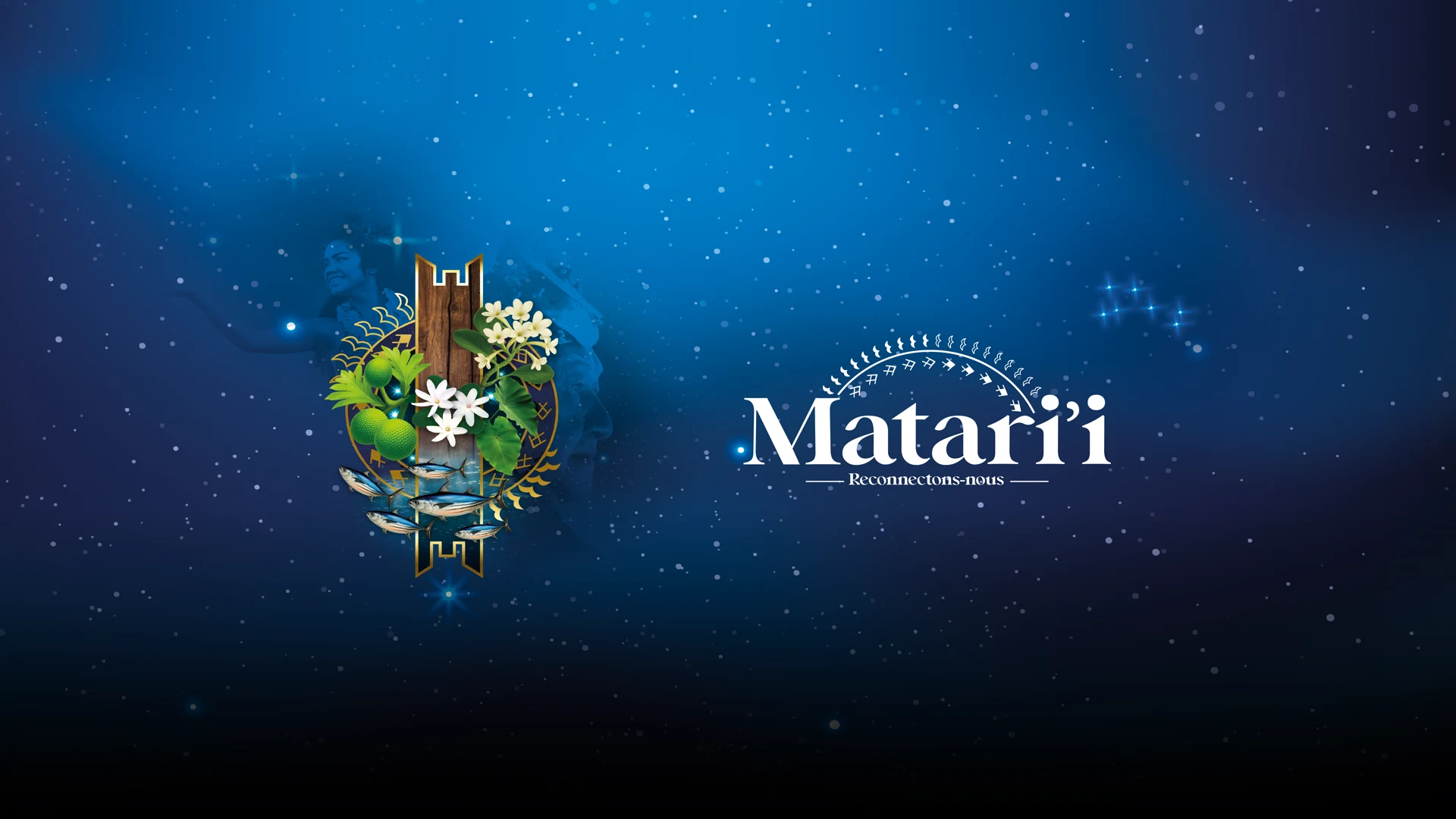
Matariʻi i niʻa is the period when the Pleiades cluster reappears in the sky, visible on the horizon at dusk. This appearance — traditionally set between 20 November and 19 May — marks the beginning of the season of abundance.
A Polynesian reading of time
In Polynesian thought, time is not linear but cyclical. Matariʻi i niʻa belongs to this cycle as a phase of opening: opening of resources, of paths, of human and spiritual bonds.
Material and spiritual abundance
This period is associated with:
- the fertility of the land
- the richness of marine resources
- the return of major fishing seasons
- harvests
- exchanges and celebrations
Once restrictions and taboos are lifted, the community shares nature’s gifts in a logic of reciprocity, a cornerstone of Polynesian social bonds.
A ceremonial and communal time
Matariʻi i niʻa is also a strong spiritual moment. Ceremonies, songs, dances and rituals celebrate the return of abundance, the presence of ancestors and the harmony between sky, land and humans.
In ancient Polynesia, some traditional societies such as the ‘Arioi made Matariʻi i niʻa a central moment, symbolising the return of creative and divine forces to earth.
Today, Matariʻi i niʻa continues to live through:
- contemporary cultural celebrations
- educational actions
- transmission projects
- reflections on the links between culture and ecology
Season of introspection
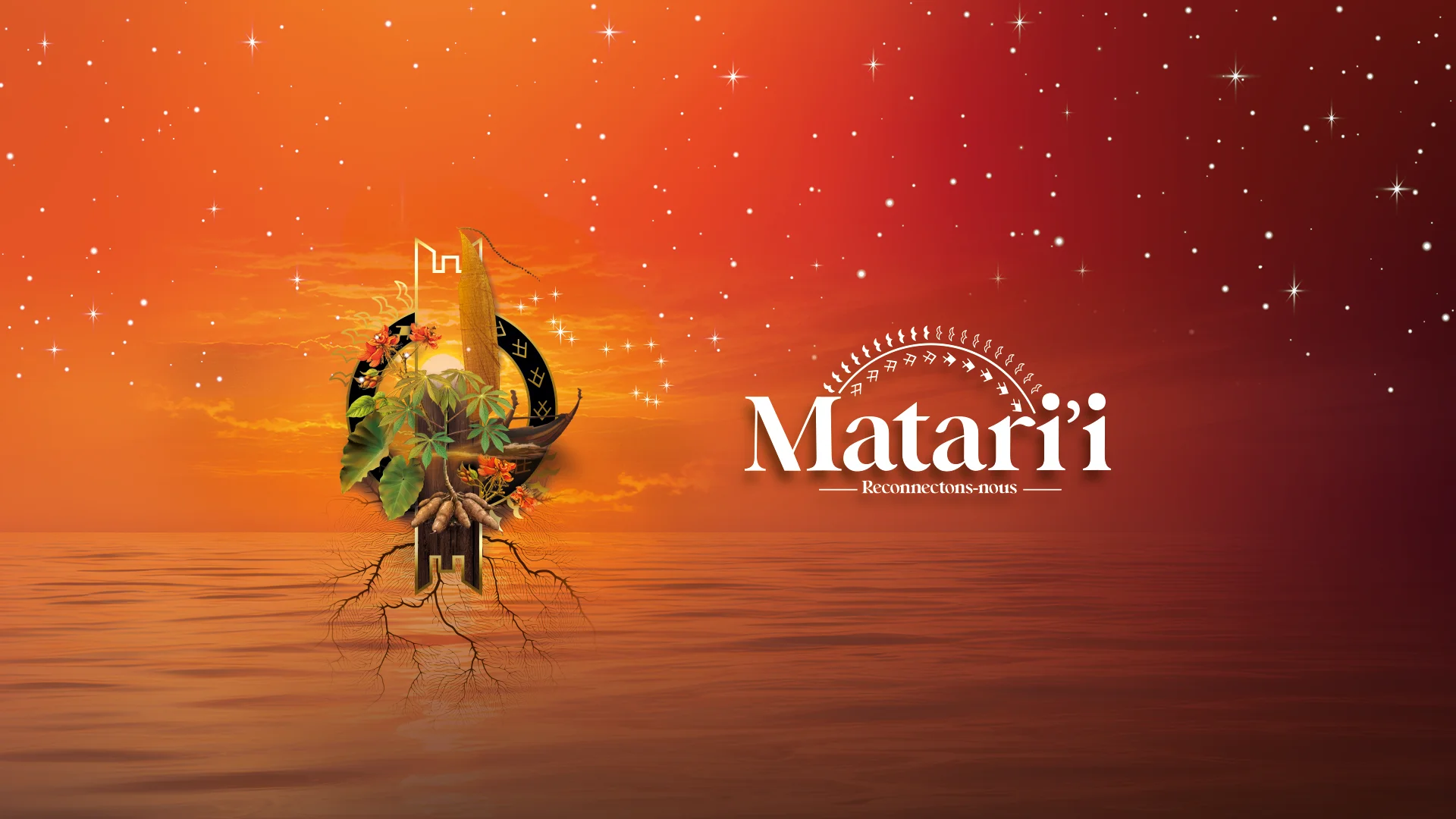
Matariʻi i Raro (“the Pleiades below”) marks the period of withdrawal and regulation, approximately from May to November. The Pleiades disappear from the sky, signalling phases of rest, preparation and preservation of resources.
Cultural meaning
- Time of rest and preservation
- Transmission of knowledge and collective memory
- Preparation of lands and tools
- Introspection and grounding in ancestral roots
The cycle
Two seasons, one rhythm
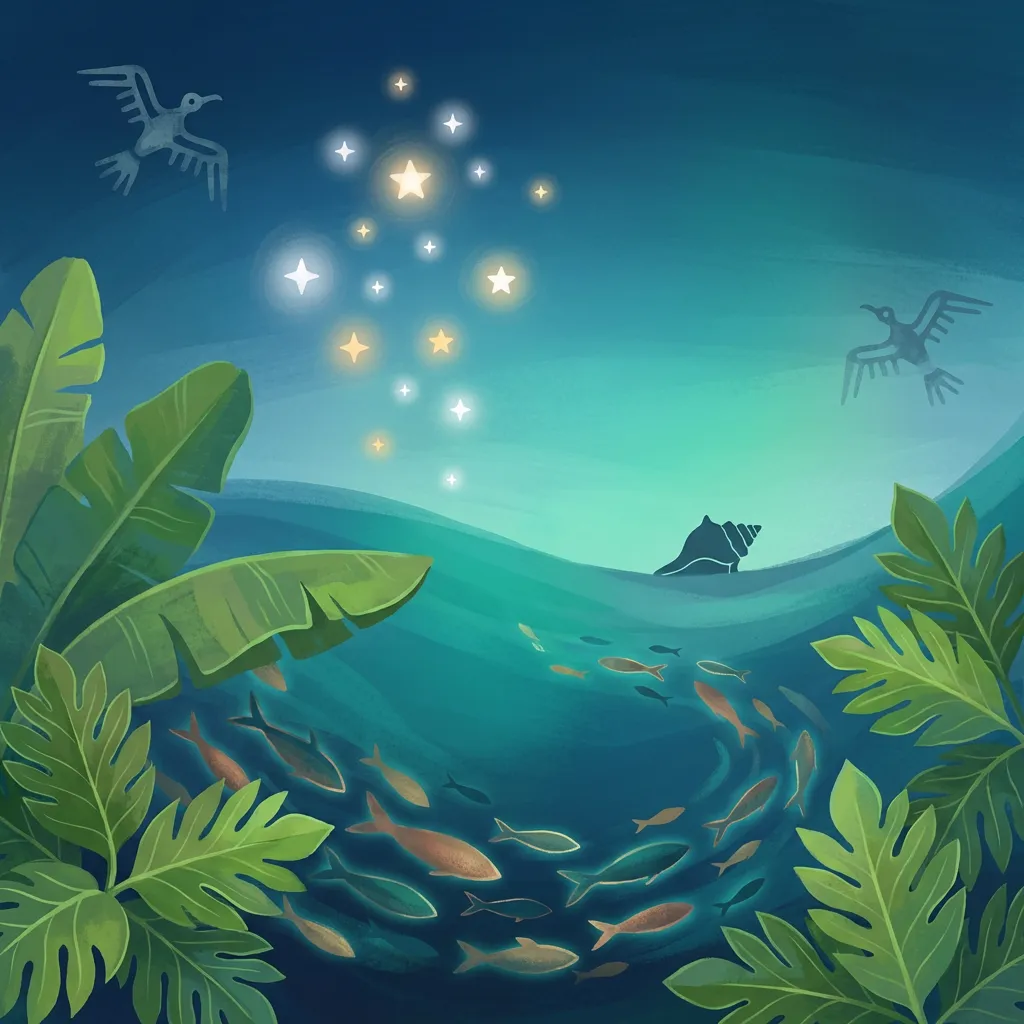
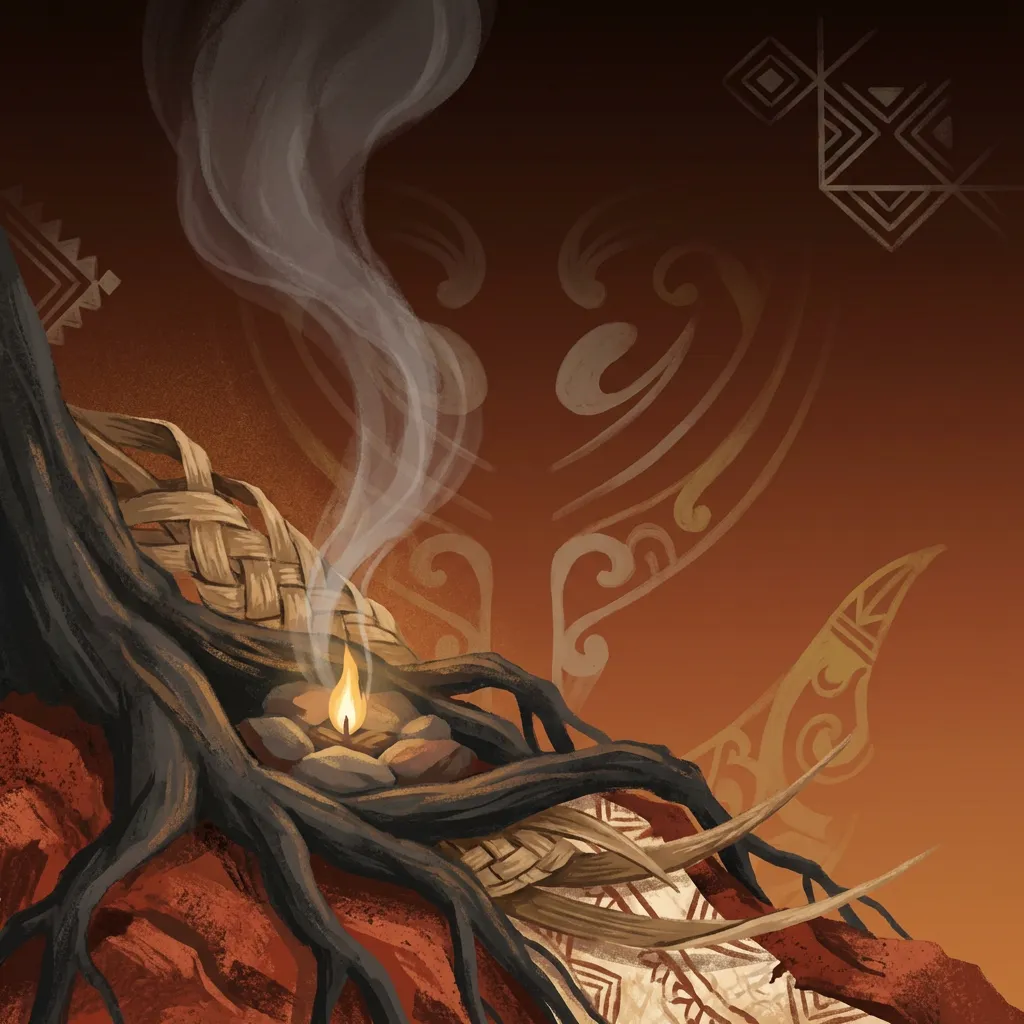
Tau Matariʻi est un cycle qui célèbre l'équilibre entre abondance et introspection, entre l'océan et la terre, entre l'action et la transmission.
Traditions by archipelago
Les pratiques liées à Matariʻi varient selon les différents archipels de la Polynésie française.
Society Islands
Cradle of the main ceremonies, with gatherings at the marae to mark the appearance of the Pleiades.
Tuamotu
Traditions linked to navigation and deep-sea fishing, guided by the observation of the stars.
Marquesas
Distinctive practices integrating the arts of tattooing and sculpture into seasonal celebrations.
Australes
Specific agricultural rituals, with an emphasis on taro and subsistence crops.
Gambier
Pearl-farming and fishing traditions rhythmed by lunar and stellar cycles.